Days in the wild, nights by the fire. When the sun goes down on safari, the bush does not go quiet: it changes shift. Daytime birds fall silent, the night chorus begins, and somewhere out in the dark a lion starts to roar. Overhead, far from any city, the sky fills with more stars than most of us have ever seen. Learning a few sounds and constellations turns your evenings into one of the richest parts of a safari. This guide is our invitation to listen and look up.
Learning to listen
A safari is mostly thought of as a visual experience, but your ears are just as important. Many animals are heard long before they are seen, and sounds tell you what is happening around you: a predator on the move, a territory being defended, a storm on its way.
The best way to start is simply to sit still. Find a quiet spot on your tent veranda at dusk or before dawn, turn off your phone and listen for ten minutes. At first everything blends into one wall of sound. Gradually you start to pick out individual voices: a dove, a distant zebra, a cricket, the splash of a hippo. Try cupping your hands behind your ears to focus on a distant call; it works surprisingly well.
Ask your guide about anything you hear. Good guides can name almost every sound in the bush, and putting a name to a call makes you notice it everywhere afterwards. Bird and wildlife apps let you learn a few classic calls before you travel, so you recognise them on your first night.
The rhythm of a safari day
| Time | What you are likely to hear |
|---|---|
| Before dawn | Lions roaring as they finish the night’s hunt, hyenas, owls and nightjars, then the first birds. |
| Sunrise | The dawn chorus: francolins, spurfowl, doves, robin-chats and the loud, laughing calls of hadada ibis. |
| Morning | Barbets, bulbuls and starlings around camp; baboons and monkeys moving through the trees. |
| Midday | A heat-hushed quiet, broken by cicadas buzzing in the trees. |
| Late afternoon | Birds become active again; zebra calls and elephant rumbles near water. |
| Dusk | Guineafowl alarm calls as they go to roost, the first owls and bush babies. |
| Night | Crickets, frogs after rain, hyenas whooping, lions roaring, hippos grunting from the river. |
Signature sounds of the bush
- Lion: a series of deep, building moans that ends in a run of grunts. Both males and females roar, mostly at dusk, during the night and before dawn, to keep in touch with the pride and warn rivals. On a still night a roar can carry for around eight kilometres, and when it is close, you feel it in your chest.
- Leopard: a rasping, rhythmic cough that sounds like someone sawing wood. It is one of the most exciting sounds to hear at night, because it means one of Africa’s most elusive cats is close by.
- Spotted hyena: a long, rising ‘whoo-oop’ that carries across the plains, used to call clan members together. Hyenas have many other calls too, including the hysterical cackle around a kill that earned them the name ‘laughing hyena’.
- Hippo: deep honks, wheezes and grunts from the river, day and night. A chorus of hippos is one of the classic sounds of camps near water.
- Elephant: low rumbles, many of them below the range of human hearing, used to communicate over long distances, and loud trumpeting when excited, playful or alarmed.
- Zebra: a surprising high-pitched barking bray, quite unlike a horse.
- Baboon: a loud, sharp ‘wahoo’ bark. It is often an alarm, and many leopard sightings start with a baboon alarm call.
- Impala and other antelope: snorts and whistles of alarm, and during the rut the rasping roars of males defending their territories.
- Tree hyrax: in the forests of the Aberdares, Kilimanjaro and the Virungas, a series of eerie shrieks and screams after dark that startles many visitors. It comes from an animal no bigger than a rabbit.
Birds you will hear
- African fish eagle: a ringing, far-carrying cry near water, the bird throwing its head back as it calls. Many people consider it the true sound of Africa.
- Hadada ibis: a loud, raucous ‘ha-ha-ha’ often heard at dawn and as birds fly to roost.
- Doves: soft, repetitive cooing that becomes the background music of hot afternoons.
- White-browed coucal: a bubbling, liquid call that sounds like water poured from a bottle, often before rain.
- Go-away birds: grey turacos whose nasal call sounds like ‘go away’.
- Tropical boubou: a pair singing a perfectly timed duet, one bird answering the other so quickly it sounds like a single call.
- Guineafowl and francolins: noisy alarm calls at dusk and dawn, often reacting to a predator.
- Owls: from the soft hoots of the spotted eagle-owl to the deep grunts of Verreaux’s eagle-owl and the purring trill of the African scops owl.
- Nightjars: churring, whistling songs from birds that sit on tracks at night and flutter up in the headlights.
Many birds also give alarm calls when they spot a snake, raptor or predator. Learning to recognise the urgency in those calls is one of the skills that helps guides find leopards and lions.
The night chorus
Much of the sound of an African night comes from animals you will never see. Crickets and katydids produce a steady, shimmering background by rubbing parts of their wings together. After rain, frogs join in with an astonishing range of calls: reed frogs tinkle like tiny bells, others whistle, click, bubble or croak. Near a pool after a storm, the chorus can be almost deafening.
Lying in a tent and listening to this orchestra, with the occasional roar or whoop rising above it, is something many guests remember long after the photographs have faded.
The night sky
Far from city lights and pollution, the night sky on safari is dazzling. On a clear, moonless night the Milky Way arches overhead as a bright, textured band, so detailed that you can see dark lanes of dust within it. It is brightest and most dramatic in the evening sky in the middle of the year, which coincides with the main dry season.
Because Kenya, Tanzania, Uganda and Rwanda lie close to the equator, you can see stars from both the northern and southern skies, something visitors from Europe or North America rarely get to do. A few highlights:
- The Southern Cross: a small, bright cross low in the southern sky. Two bright pointer stars, Alpha and Beta Centauri, lead the eye to it. People have used it to find south for centuries.
- Scorpius: one of the few constellations that really looks like its name, a curving scorpion with the red giant star Antares at its heart. It rides high in the evening sky around the middle of the year.
- Orion: the hunter, with three bright stars in a row forming his belt, prominent in the evening from about December to March.
- The Pleiades: a tight cluster of blue stars, often called the Seven Sisters.
- The Magellanic Clouds: two small neighbouring galaxies, visible as faint misty patches low in the southern sky on very dark nights.
If stargazing matters to you, try to travel close to a new moon, when the sky is darkest. Many guides carry a laser pointer and a star app, and some camps have telescopes. Even without any equipment, a quiet half hour away from the fire with your eyes adjusted to the dark is unforgettable.
Stories in the stars
Peoples across Africa have read the night sky for thousands of years, using it to mark the seasons, plan planting and herding, and tell stories. Different communities see different shapes and characters among the stars, and the timing of certain stars rising has long signalled the coming of the rains. Asking your guide or camp staff what the stars mean in their own tradition often leads to some of the best conversations of a trip.
Around the fire
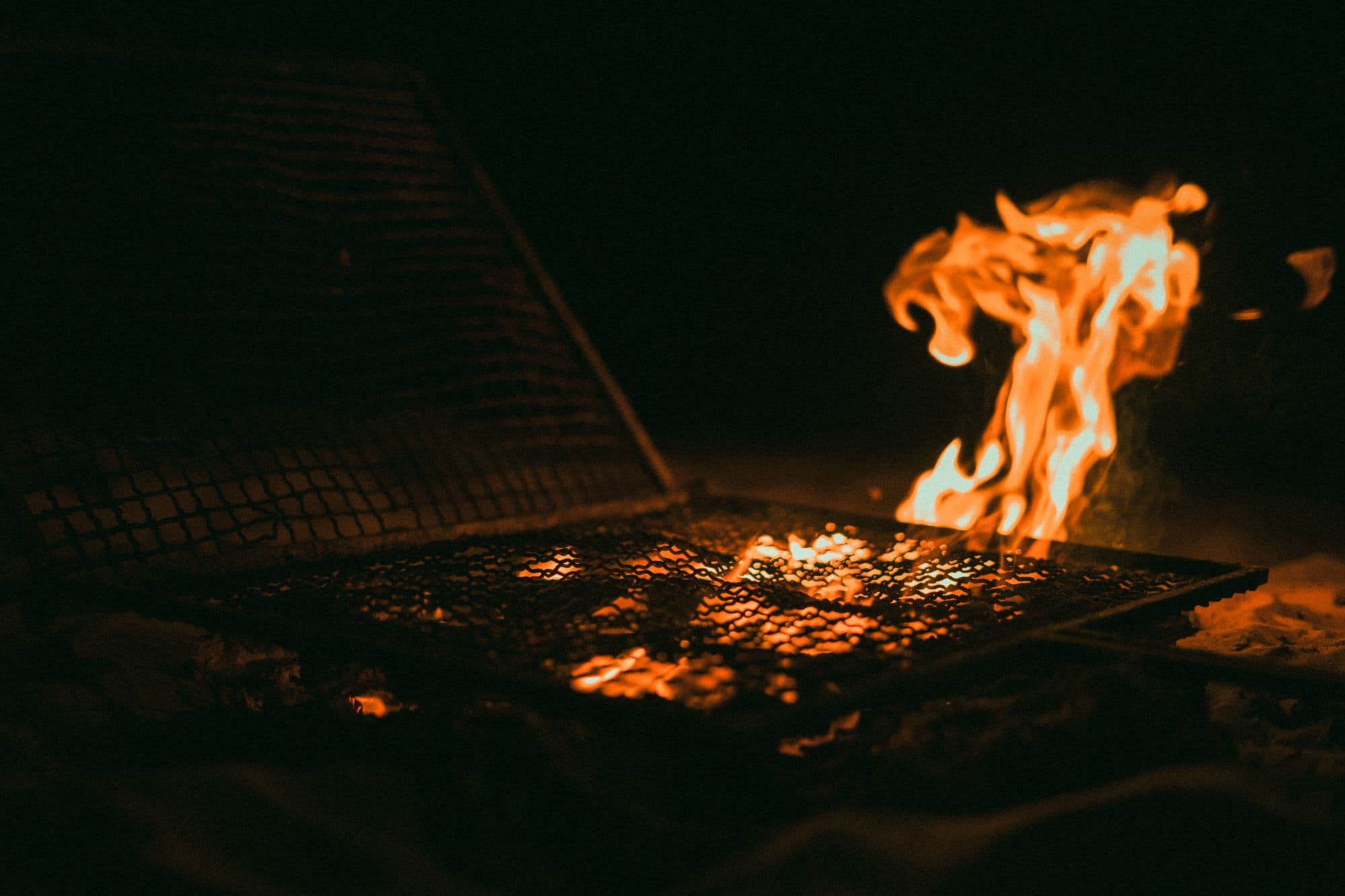
The evening fire is where a safari day comes together. Guests gather with a drink to share the day’s sightings, the near misses and the moment the leopard finally looked up. Guides tell stories gathered over years in the bush, and conversations wander from wildlife to life itself. It is the oldest kind of entertainment there is, and it never gets old.
Safety matters after dark. Most camps are unfenced, so animals can and do walk through. Staff, often local Maasai or Samburu escorts called askari, will walk you to and from your tent with a torch. Never walk around camp alone at night, and always use the radio or whistle in your tent if you need anything.
This is why we choose camps for their fireside as well as their game drives: good food, good company and open skies. It is the heart of what we mean by Rift & Ember.
Questions
What sounds will I hear at night on safari?
Commonly lions roaring, hyenas whooping, hippos grunting, owls and nightjars calling, and a chorus of frogs and crickets. Leopards give a rasping, saw-like call that is a thrill to hear.
Can you see the Southern Cross from Kenya or Tanzania?
Yes. Being close to the equator, East Africa sees the Southern Cross low in the southern sky, along with constellations of the northern sky.
When is the best time for stargazing on safari?
Clear, moonless nights are best, so travel close to a new moon if you can. The Milky Way is at its most spectacular in the evening sky around the middle of the year, during the dry season.
Is it safe to walk around camp at night?
Not alone. Most safari camps are unfenced, so staff escort guests to and from their tents after dark. Stay in your tent at night and use the radio or whistle provided if you need help.
Related
Background reading: James Currie, The Great Tours: African Safari (The Great Courses with National Geographic), alongside the national park authorities. Wording is our own; check fees and rules with the parks before you travel.