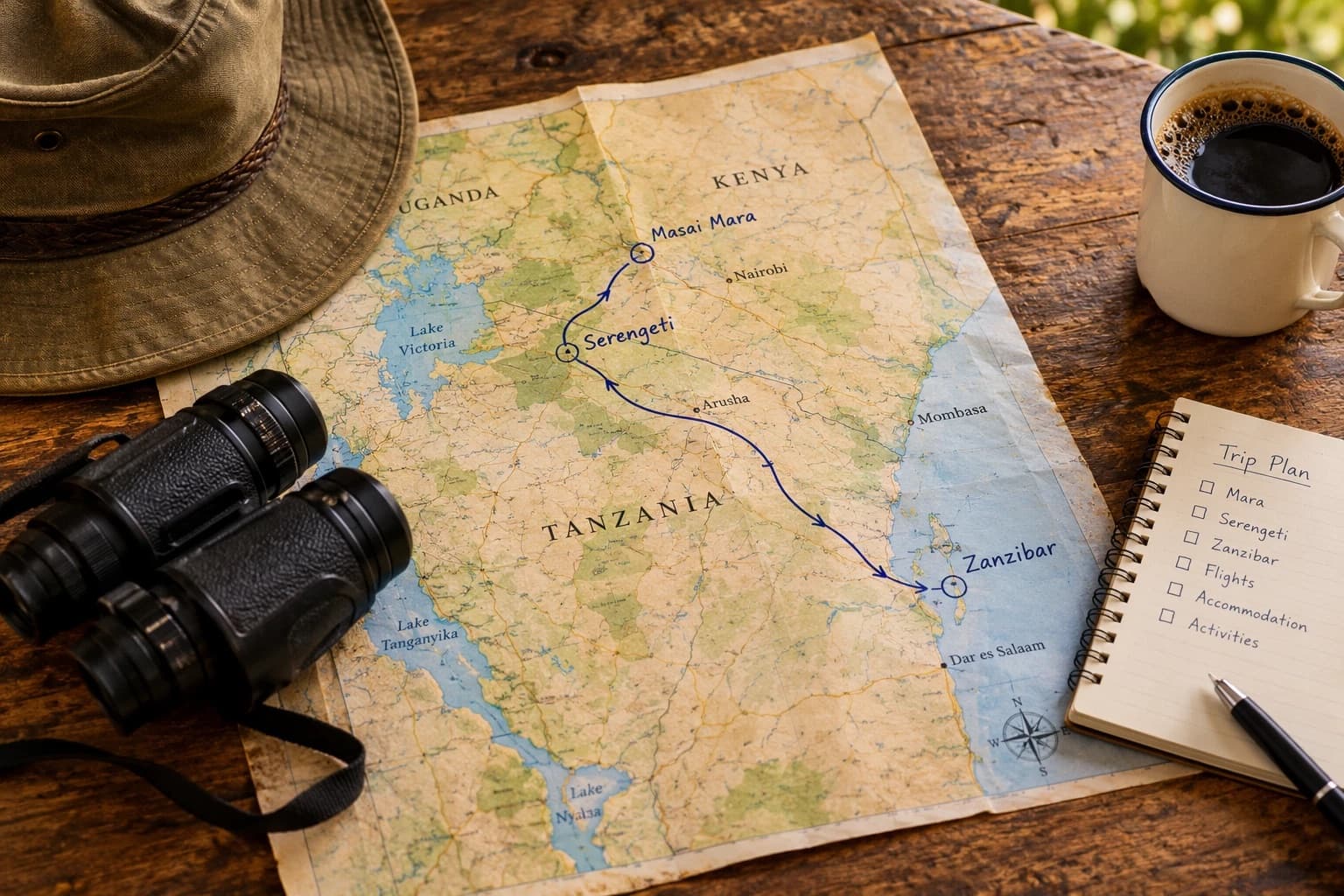
Packing well makes a safari more comfortable and more rewarding, and packing light makes it easier. East African days can be hot, but early mornings in an open vehicle and evenings in the highlands are surprisingly cold. Small planes between parks have strict luggage limits, and several countries have rules on plastic bags, camouflage and drones that catch visitors out. This guide covers what to bring, what to leave at home and why.
Three principles
- Pack light: most camps offer a laundry service, so a week’s worth of clothes is enough for a much longer trip.
- Pack in layers: temperatures can swing from near freezing at dawn on the Ngorongoro Crater rim to the high thirties in the afternoon on the plains.
- Pack for the place: a beach stay in Zanzibar, a gorilla trek in Bwindi and a game drive in the Serengeti need slightly different kit.
Clothing
Neutral, earthy colours are best on safari: khaki, olive, tan, sand and soft greens. They help you blend in on walks, show less dust and are cooler in the sun. Avoid bright colours and pure white on game drives and walks. In some areas, especially in Tanzania’s southern and western parks, tsetse flies are attracted to dark blue and black, so leave those colours for town.
- Three or four lightweight, breathable shirts or T-shirts, including at least two with long sleeves for sun and insect protection.
- Two or three pairs of comfortable trousers, ideally lightweight and quick-drying; convertible trousers are useful.
- One pair of shorts for camp and warm afternoons.
- A warm fleece or light down jacket for dawn drives, evenings and the highlands.
- A windproof and waterproof jacket, especially in the rainy seasons or on gorilla treks.
- A wide-brimmed hat that ties on securely in an open vehicle.
- A scarf or buff for dust and early-morning chill.
- Comfortable closed shoes or light walking boots, and sandals for camp.
- Swimwear for lodge pools and the coast.
- Smart-casual clothes for evenings; there is rarely a dress code, but some lodges and city hotels are a little more formal.
- Modest clothing covering shoulders and knees for towns, villages and Zanzibar’s Stone Town.
Avoid camouflage-patterned clothing and bags. Several East African countries reserve camouflage for the military, and wearing it can lead to problems with officials.
Dressing for the season and the place
East Africa sits on the equator, so the climate depends more on altitude and rain than on summer and winter. A few patterns help you pack:
- Dry season, roughly June to October: warm, sunny days and cold early mornings and nights, especially on the Ngorongoro Crater rim, in the Serengeti highlands and in Laikipia. Bring a proper warm layer, a hat and gloves for dawn drives.
- Rainy seasons, roughly March to May and in November: warmer nights, showers that usually fall in heavy bursts, and some mud. Add a good waterproof jacket and quick-drying clothes.
- Highlands and forests: Bwindi, the Virungas, Nyungwe, the Aberdares and Mount Kenya are cool and damp all year, so layers and rain gear are essential.
- The coast and islands: Zanzibar, Pemba and Mafia are hot and humid year-round. Pack light cotton or linen, a sun hat, reef-safe sunscreen and modest cover-ups for towns and villages.
Luggage for bush flights
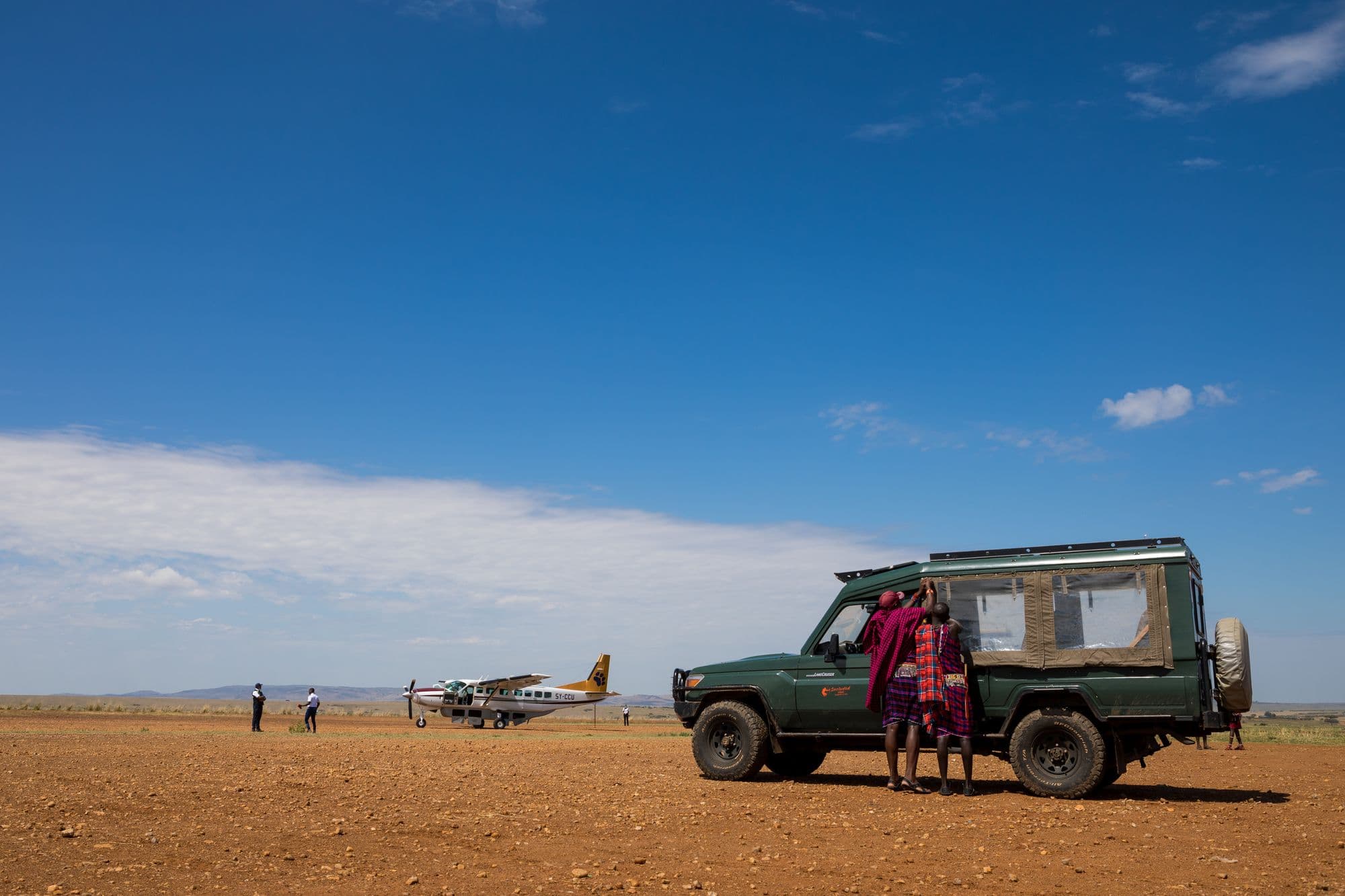
If your trip includes light-aircraft flights between parks, luggage is limited by both weight and shape. Allowances are often around 15 kg per person, including hand luggage and camera gear, and bags must be soft-sided, without wheels or a rigid frame, so they can be squeezed into small cargo holds. We confirm the exact allowance for each flight on your itinerary.
If you are travelling with more, for example extra clothes for a beach stay or business travel before your safari, we can arrange to store excess luggage in Nairobi, Arusha or Kigali and reunite you with it later. Driving safaris are more flexible, but a soft bag is still easier to pack into a safari vehicle.
Binoculars, cameras and gear
- Binoculars: ideally one pair per person, around 8×42 or 10×42. Sharing one pair in a vehicle means missing the moment.
- Camera: whatever you are comfortable using. A zoom lens reaching at least 300 mm, and ideally 400–600 mm, makes a big difference for wildlife; a wide lens captures landscapes.
- Plenty of memory cards and spare batteries; charging can be limited in remote camps.
- A way to back up photos each evening, such as a small portable drive or laptop.
- A beanbag or small cushion to steady a long lens on the vehicle.
- A head torch or small flashlight for walking to your tent and reading at night.
- A power bank and a universal travel adaptor.
- A small dry bag or plastic-free zip pouches to protect electronics from dust and rain.
- A refillable water bottle; most camps provide filtered water to reduce plastic.
- A regional wildlife or bird guide, or a good field guide app downloaded before you travel.
Kenya, Uganda and Tanzania mainly use UK-style three-pin plugs, while Rwanda mainly uses European-style two-pin plugs. Many remote camps run on solar power, so charging may be available only at certain times or in the main area. See our photography tips for more on camera settings and lenses.
Toiletries and health
- High-factor sunscreen, lip balm with sun protection and sunglasses; the equatorial sun is strong even when it feels cool.
- Insect repellent containing an effective active ingredient such as DEET or picaridin.
- Any prescription medication, in its original packaging, with enough for the whole trip plus a few extra days, in your hand luggage.
- Malaria tablets if advised by your travel clinic.
- A small first-aid kit: plasters, blister care, antiseptic, painkillers, antihistamines, rehydration salts and something for an upset stomach.
- Hand sanitiser and wet wipes.
- Spare glasses or contact lenses, and eye drops for dust.
Many camps provide basic toiletries, but bring your own if you prefer particular brands. Choose biodegradable products where you can; water in remote camps is precious and often recycled.
Documents and money
- Passport valid for at least six months after your return, with blank pages for visas and stamps.
- Visa or electronic travel authorisation, applied for through the official government website; our travel information page has the links.
- Proof of yellow fever vaccination if required for your route.
- Travel insurance documents, including cover for medical evacuation.
- Copies of all important documents, stored separately from the originals and digitally.
- Some US dollars in newer, undamaged notes; older or torn notes are often refused. Cards are accepted in cities and many lodges, but cash is useful for tips and small purchases.
For gorilla and chimpanzee treks
Primate treks need a few extra items. Forest trails are steep, wet and overgrown, and nettles and biting ants are common.
- Worn-in waterproof hiking boots with good ankle support.
- Long trousers you can tuck into thick socks, and a long-sleeved shirt.
- Gardening gloves for gripping vegetation.
- A lightweight rain jacket, even in the dry season.
- A small daypack with water, snacks and insect repellent.
- Gaiters if you have them.
Our gorilla trekking guide explains what to expect on the day.
For climbing Kilimanjaro
A Kilimanjaro climb takes you through several climate zones, from warm rainforest to freezing, windy summit nights. You will need a full set of mountain clothing, including thermal base layers, an insulated jacket, waterproofs, warm gloves and hat, broken-in hiking boots and a warm sleeping bag. We provide a detailed kit list with every climb and can arrange rental of many items in Moshi or Arusha.
Travelling with children
Children enjoy safaris enormously with a little preparation. Bring a pair of child-sized binoculars, a simple animal checklist or spotting book, entertainment for long drives, favourite snacks and a few familiar comforts. Sun protection, insect repellent suitable for children and a warm layer for early mornings are essential. Many camps run activities for young guests, and a private vehicle lets you take breaks whenever you need them.
What to leave at home
- Plastic carrier bags: Kenya, Tanzania and Rwanda have banned single-use plastic bags, and they may be confiscated at the airport. Use reusable bags and zip pouches made from other materials.
- Camouflage clothing and bags.
- Drones, unless you have arranged the necessary permits in advance; flying them in national parks without permission is not allowed.
- Hard-shell suitcases if you are flying between parks.
- Valuable jewellery and anything you would hate to lose.
- Too many clothes: with laundry available, less really is more.
A quick checklist
| Category | Essentials |
|---|---|
| Clothing | Neutral layers, warm fleece, rain jacket, sun hat, closed shoes |
| Gear | Binoculars, camera, spare batteries and cards, head torch, adaptor |
| Health | Sunscreen, insect repellent, medication, first-aid kit |
| Documents | Passport, visa, insurance, vaccination certificate, US dollars |
| Bag | Soft-sided duffel within your flight allowance |
Questions about a specific item? Ask us. We are happy to check anything against the camps, flights and activities on your itinerary.
Questions
What colours should I avoid on safari?
Avoid bright colours and white on game drives and walks, and dark blue or black in tsetse fly areas. Khaki, olive, tan and other earthy tones are ideal. Avoid camouflage prints, which are reserved for the military in several countries.
How much luggage can I take on safari flights?
Light aircraft often allow around 15 kg per person in a soft bag, including hand luggage. We confirm the allowance for your flights and can store anything extra.
Can I bring plastic bags to Kenya, Tanzania or Rwanda?
No. All three countries have banned single-use plastic carrier bags, and they may be confiscated on arrival. Pack with reusable fabric bags or pouches instead.
Do I need cash on safari?
Some. Bring newer, undamaged US dollar notes for tips and small purchases; older or torn notes are often refused. Cards are accepted in cities and many lodges.
Related
Background reading: James Currie, The Great Tours: African Safari (The Great Courses with National Geographic), alongside the national park authorities. Wording is our own; check fees and rules with the parks before you travel.