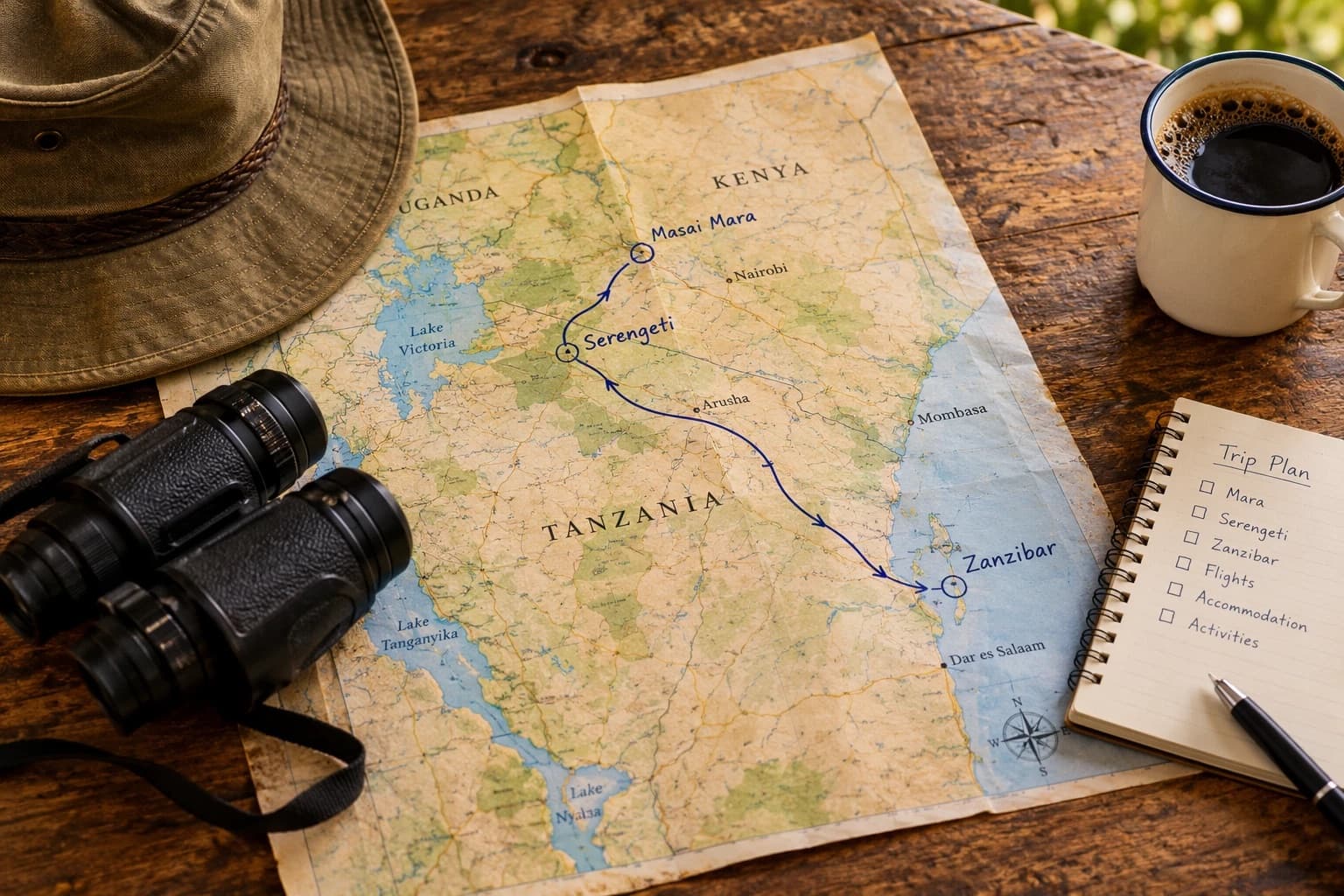
Well-run tourism is one of the strongest forces protecting Africa’s wildlife, because it makes wild places worth more intact than cleared, farmed or poached. But not all tourism is equal. The camps you choose, the activities you book and the way you behave can either support conservation and local people or quietly undermine them. This guide explains why it matters, how the money flows and how to make choices you can feel good about.
Why it matters
Over the past century many of Africa’s best-loved animals have declined dramatically. Lions have lost most of their former range, elephant numbers fell sharply during waves of ivory poaching, cheetahs and African wild dogs survive in a fraction of the land they once roamed, and both rhino species were pushed to the edge of extinction. Giraffes, vultures and pangolins have all declined too.
The causes are familiar: habitat lost to farms, roads and settlements; poaching for ivory, horn, bushmeat and scales; conflict between wildlife and people; and, increasingly, climate change. Against those pressures, tourism provides something vital: a reason, and the money, to keep land wild.
People and parks
Conservation in Africa has a complicated history. Many parks were created by moving communities off land they had lived on for generations, and for decades local people saw little benefit from the wildlife on their doorstep, only crop raids, lost livestock and restrictions. Unsurprisingly, some turned to poaching or saw wildlife as a nuisance.
Today the most successful conservation work starts from the opposite principle: wildlife survives where the people who live alongside it benefit from it. That can mean jobs as guides, rangers, cooks and managers; income from land leased to conservancies; shared revenue from park fees; or support for schools, clinics, water and small businesses. When a living elephant or lion is worth more to a community than a dead one, attitudes change, and some of the strongest conservation champions are former poachers.
How the money reaches communities
- Community conservancies in Kenya: around the Maasai Mara, in Laikipia and across the north, landowners set land aside for wildlife and lease it to tourism partners, receiving regular payments and jobs. Conservancies also limit vehicle numbers, which makes for a better safari.
- Wildlife management areas in Tanzania: community-owned land around parks, where villages earn income from tourism and other wildlife-based activities.
- Revenue sharing in Uganda and Rwanda: a share of park and gorilla permit revenue is invested in communities living around the parks, funding projects chosen locally.
- Lodges on community land: some of the region’s finest camps are joint ventures with local communities, paying rent and fees and employing people from the area.
When you pay park and conservancy fees, you are funding this system directly. They pay for rangers and anti-poaching patrols, road and water management, removal of invasive plants, research and the upkeep of protected areas, and in community areas a large share goes straight to the landowners.
Choosing camps and operators
The single biggest choice you make is where you stay. Here is what to look for:
- Light footprint: camps built on raised platforms rather than concrete, using local and sustainable materials, designed so the land can recover if the camp ever closes.
- Careful use of resources: solar power, water recycling, waste management and minimal single-use plastic.
- Real community partnership: camps on community land or in conservancies, with transparent payments and benefits.
- Local employment and training: guides, managers and staff from the area, paid fairly and given opportunities to progress.
- Support for conservation: funding for anti-poaching, research, habitat restoration, wildlife corridors or species reintroductions.
- Recognised certification: schemes such as Ecotourism Kenya’s eco-rating and Travelife assess operators and camps against sustainability standards.
Ask us about any camp we suggest; we are happy to explain why we chose it and what it does for the people and wildlife around it.
Questions to ask any operator
- Who owns the land the camp is on, and how do local people benefit?
- Where are the guides and staff from, and how are they trained?
- How do your guides behave at busy sightings?
- What do you do about plastic, water and waste?
- Which conservation or community projects do you support, and how?
- Do you offer or promote any activities involving captive or hand-reared wild animals?
A responsible operator will be glad to answer. Vague or defensive replies are a warning sign.
Behaving well on safari
- Respect the animals’ space. Ask your guide to keep a respectful distance and to leave if an animal shows signs of stress.
- Avoid crowding sightings. Wait your turn rather than pushing in, and support guides who limit the number of vehicles at a sighting.
- Stay on roads and tracks where off-road driving is not permitted, and never encourage a guide to break park rules for a better photo.
- Never feed wild animals, including monkeys and birds around camp.
- Keep noise down and never call out to animals.
- Take all litter with you, and say no to single-use plastic where you can.
- Use water carefully; in many camps it is trucked in or pumped from limited sources.
Experiences to avoid
Some activities are marketed as conservation but do real harm. As a rule, avoid anything that involves handling wild animals for entertainment:
- Cuddling or bottle-feeding lion cubs, which are usually bred in captivity for this purpose and never returned to the wild.
- Walking with ‘tame’ lions or cheetahs.
- Riding elephants or watching animals perform.
- Volunteering schemes that put untrained visitors in contact with wild animals.
- Visiting children’s orphanages as a tourist attraction, which child-protection organisations warn can encourage the separation of children from their families.
Genuine sanctuaries and orphanages do exist and do important work, but they keep visitor contact limited and work towards returning animals to the wild where possible. The Sheldrick Wildlife Trust’s elephant nursery in Nairobi is a well-known example: visitors watch orphaned elephants from a distance during a short daily visiting hour, and the elephants are gradually rehabilitated back into the wild.
Some conservation programmes also invite visitors to take part in legitimate work, such as joining researchers as they track or collar animals. These experiences are run by professionals, put the animals’ welfare first and usually include a contribution to the project.
Respecting people
Responsible travel is as much about people as wildlife. Ask before photographing anyone, their children, their homes or their market stalls, and accept a ‘no’ graciously. Choose cultural visits led by the community itself, where fees go to the village, rather than staged performances. Dress modestly in towns and villages, especially in Zanzibar and other largely Muslim coastal areas.
Buy crafts directly from the people who make them, and pay a fair price; haggling is normal in markets, but keep it friendly. Learn a few words of Swahili, such as ‘Jambo’ (hello), ‘Habari?’ (how are you?) and ‘Asante sana’ (thank you very much). A greeting in someone’s language is always appreciated.
What not to buy
Never buy products made from wildlife, including ivory, rhino horn, animal skins, turtle shell, coral, seashells from protected areas or pangolin scales. Apart from fuelling poaching, it is illegal to export or import most of them, and penalties can be severe. Choose instead from the wealth of beadwork, baskets, carvings from sustainable wood, textiles, coffee, tea and art made by local artisans.
Flights and carbon
Flying to East Africa has a carbon cost that is hard to avoid. You can reduce your impact by staying longer and travelling less often, spending more nights in fewer places, combining road transfers with flights where the distance is reasonable, and choosing camps that run on solar power. Carbon offset schemes vary greatly in quality, so if you use one, choose a reputable, independently verified project, ideally one that protects habitat in the region you visit.
Giving back
Many travellers want to support a school, clinic or conservation project they have seen. The most effective way is to give through established, accountable organisations rather than handing out money, sweets or gifts directly, which can encourage begging and create dependence. Donations of time and skills can also help, when they are matched to a genuine local need. We can suggest reputable partners in each country.
Above all, the most powerful thing you can do is simply to go on safari with a responsible operator. Your visit funds rangers, supports families and proves, again, that wild Africa is worth more alive.
Questions
Is it ethical to visit a Maasai village?
It can be, if the visit is run by the community, fairly priced and respectful. Choose visits where the fees go to the village, ask before taking photographs and avoid staged shows.
Which wildlife activities should I avoid?
Avoid cub petting, walking with tame lions, elephant rides and any experience that involves handling wild animals. They rarely help conservation and often rely on captive breeding.
Do park fees really help conservation?
Yes. Park and conservancy fees pay for rangers, anti-poaching patrols, roads, water management and research, and in community conservancies a large share goes directly to local landowners.
Should I give gifts to children I meet?
It is better not to hand out sweets, money or gifts directly, which can encourage begging. If you would like to help, give through an established school or community project.
Related
Background reading: James Currie, The Great Tours: African Safari (The Great Courses with National Geographic), alongside the national park authorities. Wording is our own; check fees and rules with the parks before you travel.