Game drives are the heart of a safari, but some of the most memorable moments happen on foot, on the water, in the air or after dark. Each experience shows you the wild from a different angle and uses different senses. This guide explains what each one offers, how it works, how to stay safe and where in East Africa to find it, so you can build a trip with real variety.
Walking safaris
Stepping out of the vehicle changes everything. On foot you hear the crunch of dry grass, smell wild sage and elephant dung, and feel how small you are in a landscape shared with animals far larger and faster than you. Walking is less about getting close to big game and more about understanding how the bush works.
A good walking guide turns the ground into a story. Tracks reveal which animal passed, in which direction and how long ago. Dung shows what an animal has eaten and how recently it was here. Flattened grass marks where a buffalo rested; a drag mark and a few drops of blood may tell of a leopard’s kill. Oxpeckers, the small birds that ride on buffalo, giraffe and rhino, often give away an animal’s position with their calls. You notice spider webs, seed pods, termite mounds and medicinal plants that you would drive straight past.
Walks range from a two- or three-hour stroll from camp in the cool of the morning to multi-day trails, where you walk between simple fly camps or a mobile camp that moves ahead of you. Some walking safaris in northern Kenya use camels to carry the load, led by Samburu or Maasai guides who know the land intimately.
Where to walk, and how to stay safe
Kenya’s Laikipia Plateau is one of the best walking regions in East Africa, with views of Mount Kenya, open country and species such as Grevy’s zebra, reticulated giraffe and large elephant herds. The conservancies bordering the Maasai Mara also offer walks that are not allowed inside the reserve. In Tanzania, Ruaha and Nyerere are excellent for walking, Arusha National Park offers walks on the slopes of Mount Meru, and some areas of the Serengeti and Tarangire allow guided walks. In Uganda, Lake Mburo is a good place to walk among zebra and eland, and in Rwanda you can walk in Akagera.
- Always walk with a qualified guide and, where big game is present, an armed ranger.
- Listen carefully to the safety briefing, and walk in single file behind the guide.
- Keep quiet, stay close together and never run if you meet an animal; follow the guide’s instructions.
- Wear neutral colours, long trousers and sturdy closed shoes, and bring a hat and water.
- Many camps set a minimum age for walking, often between 12 and 16.
Night drives
As the sun sets and the sundowner glasses are packed away, a different cast takes over. Lions stretch, yawn and set off to hunt. Leopards emerge from cover. Hyenas begin their whooping calls. Hippos leave the water to graze, sometimes walking many kilometres overnight. The night also belongs to animals rarely seen by day: bush babies leaping through the trees, genets and civets, porcupines, springhares bounding like miniature kangaroos, white-tailed mongooses and, with real luck, an aardvark or pangolin.
Night drives are not allowed in most national parks and reserves, which limit driving to daylight hours to reduce disturbance. They take place in private conservancies and some community areas, such as the conservancies bordering the Maasai Mara and across Laikipia, where rules are set by the landowners. Good guides use a spotlight, ideally fitted with a red filter, which is gentler on animals’ eyes, and avoid lighting up prey animals in a way that exposes them to predators. A night drive also gives you a chance to see the stars far from any lights; our night sky guide explains what to look for.
Boat safaris
A boat brings you eye to eye with hippos and crocodiles and lets you approach riverbanks quietly, where elephants come to drink and kingfishers dive. It is also a wonderfully relaxing way to spend a hot afternoon.
- Nyerere National Park, Tanzania: boat trips on the Rufiji River and its lakes, with hippos, crocodiles, elephants and waterbirds such as the African skimmer.
- Queen Elizabeth National Park, Uganda: the Kazinga Channel between Lake Edward and Lake George, with dense groups of hippos and buffalo and superb birdlife.
- Murchison Falls National Park, Uganda: a launch trip up the Nile to the foot of the falls, where the river forces its way through a narrow gorge.
- Arusha National Park, Tanzania: gentle canoeing on the Momella lakes, with Mount Meru and sometimes Kilimanjaro in view.
- The coast and islands: dhow trips, snorkelling and diving off Zanzibar, Pemba and Mafia.
Hot-air balloon flights
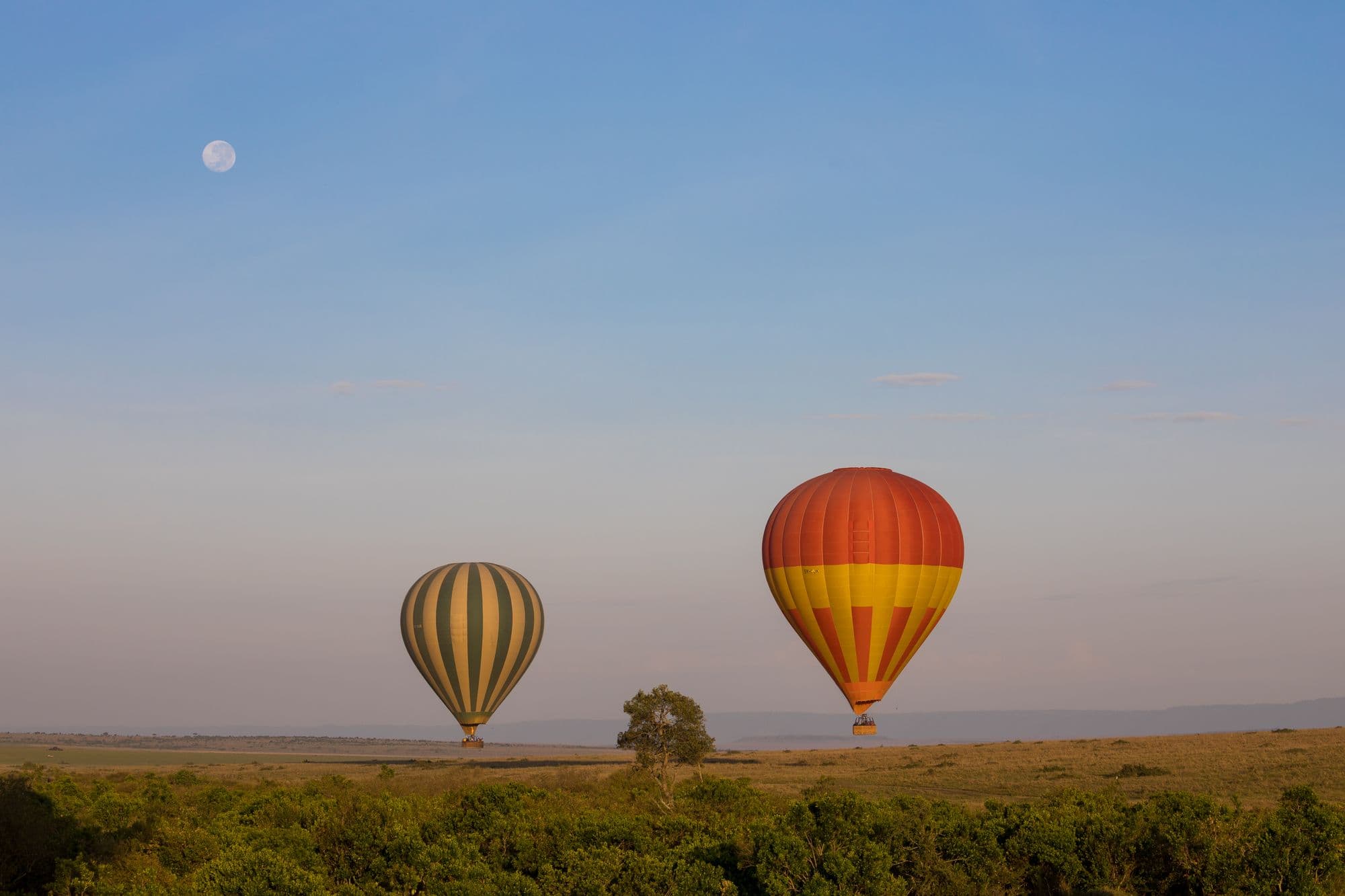
Drifting silently over the Maasai Mara or the Serengeti at sunrise, with herds and rivers spread out below, is one of the great experiences of an East African safari. You are collected from camp before dawn, watch the balloons inflate in the half-light and lift off as the sun rises. Flights last around an hour, depending on the wind, and usually end with a bush breakfast where you land.
Balloon flights operate in specific areas and are weather dependent, so they are booked in advance and occasionally cancelled for safety. They are particularly special during the migration season, but beautiful at any time of year.
Other ways to explore
- Horseback safaris: in some conservancies around the Maasai Mara and in Laikipia, experienced riders can ride among zebra, giraffe and antelope, which are often more relaxed around horses than people on foot.
- Cycling: Kenya’s Hell’s Gate National Park allows cycling among zebra and giraffe through a dramatic gorge, and village bike rides are popular around Mto wa Mbu in Tanzania.
- Chimpanzee and gorilla trekking: forest walks to meet our closest relatives; see our gorilla trekking guide.
- Mountain hikes: from day hikes on the Ngorongoro highlands and the Empakaai Crater to climbing Kilimanjaro or Mount Kenya.
- Scenic flights: light-aircraft flights between parks are an experience in themselves, with views over the Rift Valley and the plains.
Photographic safaris
Every safari offers wonderful photography, but dedicated photographic safaris go further. Vehicles carry fewer guests, so everyone has a window seat and room for long lenses, and many have built-in camera mounts or beanbags. Guides who understand photography position the vehicle for the light and background, and wait patiently for behaviour rather than moving on after a quick look.
A few tips help on any safari, whatever your camera:
- Carry two or three lenses, such as 24–70 mm for landscapes, 70–200 mm for closer animals and a long 100–400 mm or 150–600 mm zoom. Two camera bodies save changing lenses in dust.
- Understand the three controls of exposure: aperture, shutter speed and ISO. Use a wide aperture to blur busy backgrounds, a fast shutter speed to freeze action, and raise ISO only as much as you need in low light.
- Aperture or shutter priority modes give consistent results while you concentrate on the moment; switch to manual when you want full creative control.
- Be patient. Set up for the moment, then wait for the yawn, the leap, the eye contact.
- Think about composition: leave space for an animal to look or move into, and include the landscape when it tells the story.
- Get low where you can; an eye-level angle is far more intimate than shooting down.
- Bring plenty of memory cards and spare batteries, and back up your images each evening.
- Remember to put the camera down and simply watch.
Meeting the people
The people of East Africa are as much a part of a journey as the wildlife. A well-run cultural visit can be among the most rewarding parts of a trip, a chance to learn how communities live alongside wildlife, to share food and conversation, and to hear perspectives very different from your own.
- Maasai and Samburu: semi-nomadic herders whose lands border many of Kenya’s and Tanzania’s parks.
- Hadzabe: one of Africa’s last hunter-gatherer communities, living around Lake Eyasi in northern Tanzania.
- Chagga: farmers on the fertile slopes of Kilimanjaro, known for coffee and banana farms.
- Batwa: the forest people of the Bwindi and Virunga region, whose community walks share their traditional forest knowledge.
- Rwandan culture: drumming, intore dance and community projects around Volcanoes National Park.
Choose visits that are led by and benefit the community itself rather than staged shows. Always ask before photographing anyone or their home, dress modestly in villages, and buy crafts directly from the people who make them. Our responsible safari guide has more advice.
Building variety into your trip
The best safaris mix experiences. A typical private itinerary might include game drives in the Serengeti, a balloon flight at dawn, a walk in a conservancy, a boat trip on the Rufiji and a cultural visit, with time to rest in between. Tell us what appeals and we will choose camps where those activities are possible, at the right time of year.
Questions
Can I do a night drive in the Serengeti or the Maasai Mara?
Generally not inside the national park or reserve, where driving after dark is not permitted. Night drives are offered in private conservancies, such as those bordering the Maasai Mara, and in Laikipia.
Is a walking safari safe?
Yes, with a qualified and, where needed, armed guide who briefs you first. You walk in single file, stay quiet, follow instructions and keep a respectful distance; guides choose routes and wind direction carefully.
Where can I take a hot-air balloon flight?
Balloon flights operate over the Maasai Mara in Kenya and the Serengeti in Tanzania. They take off at sunrise, last about an hour and usually end with a bush breakfast.
Can children join walking safaris and cultural visits?
Cultural visits suit all ages. Walking safaris usually have a minimum age, often between 12 and 16, set by each camp for safety.
Related
Background reading: James Currie, The Great Tours: African Safari (The Great Courses with National Geographic), alongside the national park authorities. Wording is our own; check fees and rules with the parks before you travel.